Flowers Collection: A Designer's Real-World Embroidery Review
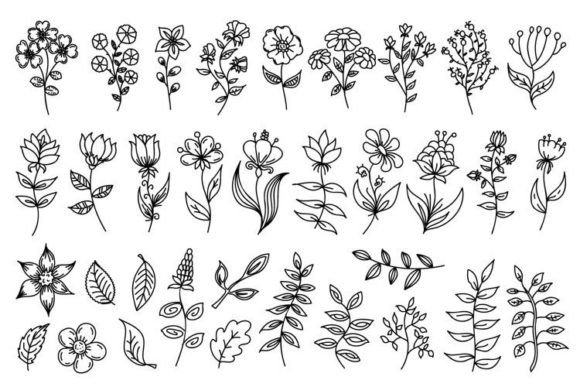
When I first opened the Flowers Collection, my immediate reaction wasn't about stitch counts or file formats. It was about the mood. There is a distinct elegance to a black outline floral set that relies on thin lines and abstract shapes rather than heavy fills. As an experienced designer who has tested countless assets for client projects, I know that not every digital graphic translates well into thread. Some designs look beautiful on a screen but fall apart under the needle. However, this collection of linear floral design elements isolated on a white background feels like it was born for the embroidery hoop.
I have spent years reviewing graphics for small business owners, Etsy sellers, and craft fair vendors. My goal is always to separate the hype from the utility. Today, I am looking at how this specific set performs when moved from a computer screen to a real-world product. Whether you are creating custom apparel, personalized gifts, or boutique branding, understanding the practical limitations and strengths of a design is crucial. Let's dive into what happens when we turn these delicate branches and leaves into tangible threads.
The First Impression: Minimalism Meets Texture
The visual personality of Flowers Collection is defined by its restraint. In a market saturated with dense, colorful floral bursts, a black outline style offers a sophisticated alternative. The group of thin line abstract flowers suggests a modern, perhaps even Scandinavian or minimalist aesthetic. When I imagine this design stitched, I don't see a chaotic explosion of color; I see clean, deliberate strokes that rely on negative space.
This is where the "Illustrations" category often trips people up. Many vector graphics are too detailed for machine embroidery. If the original illustration has tiny gaps or intricate corners that are smaller than a single satin stitch column, the design will fail. Fortunately, the linear nature of these elements implies they were likely designed with scalability in mind. The layout feels balanced, making it perfect for accents rather than overwhelming centerpieces. It creates a mood that is refined and understated, which is exactly what high-end handmade products need.
Real-Life Scenario: The Custom Tote Bag Project
To truly evaluate this design, I need to place it in a realistic scenario. Let's say I am preparing a batch of custom embroidered tote bags for a local artisan market. These aren't just plain canvas bags; they are part of a cohesive brand identity for a small shop selling organic soaps. The goal is to create a product that looks professional enough to command a higher price point but retains that "handmade" charm.
I decided to test Flowers Collection on a sturdy cotton canvas tote. The black outline style works exceptionally well here. Because the design is primarily linear, it doesn't require massive amounts of thread, which keeps the fabric flexible and prevents the bag from becoming stiff and unwieldy. When stitched in a deep charcoal or classic black thread against the natural canvas, the result is strikingly crisp. The thin lines capture the delicate veins of the leaves without getting lost in the weave of the fabric.
If I had used a different design—one with heavy fill stitches—the bag might have felt rigid, making it difficult to carry items inside. With this linear approach, the finished product maintains the drape and feel of the original material. Customers walking through the market would notice the quality immediately. The design elevates a simple tote into a statement piece without screaming for attention. It says, "This was made with care," rather than "Look how much thread I used."
Where This Design Shines: Versatility Across Products
The strength of Flowers Collection lies in its adaptability. It isn't limited to just one type of item. I have seen similar designs succeed across a wide spectrum of embroidery projects:
- Custom Apparel: On sweatshirts or t-shirts, the linear style adds a subtle detail to the pocket area or sleeve cuff. It avoids the stiffness that can occur with large chest prints, making the garment more comfortable to wear.
- Baby Items: For baby clothes or nursery decor, soft outlines are safer and gentler than bulky textures. A onesie embroidered with these thin branches feels luxurious and safe against sensitive skin.
- Holiday Gifts: Imagine these designs on holiday towels or pillow covers. The black and white contrast fits perfectly with winter themes or elegant Christmas aesthetics.
- Small Shop Merchandise: For Etsy sellers, this design is a goldmine. It works beautifully as an embroidered patch for jackets, a logo on aprons, or a decorative element on kitchen towels.
The key here is that the design acts as a versatile asset. You can scale it down for a hat brim or expand it for a blanket border. The abstract nature of the flowers allows them to blend seamlessly with various color palettes, making them ideal for commercial embroidery projects where clients request specific brand colors.
Critical Considerations: Where to Be Careful
However, being an honest reviewer means acknowledging the pitfalls. While Flowers Collection is excellent, it is not a magic bullet for every situation. There are specific constraints you must consider before hitting the start button on your machine.
First, consider the hoop size. Thin lines can be tricky if the design is too small relative to the hoop. If you try to embroider these delicate branches on a very small surface, the stabilizer might shift, causing the fine details to blur. Always ensure you have enough room to stabilize the area properly.
Second, think about the fabric texture. While this design works wonders on smooth cottons and linens, textured fabrics like bouclé or thick wool can obscure the thin lines. The thread might get lost in the pile of the fabric, losing the crisp definition that makes the design special. Similarly, stretchy fabrics require extra care. Without proper stabilizer, the tension required for satin stitches could distort the fabric, warping the geometric flow of the flowers.
Dense stitch areas are another potential issue. Even though this is an outline design, if the spacing between the lines is too tight, the needle might struggle to penetrate the fabric cleanly, leading to puckering. If you are working with dark fabric, remember that black thread on black fabric will disappear. You will need to select a contrasting thread color, perhaps a silver or a stark white, to make the design pop.
Professional Designer Notes for Success
Before you commit to a full production run, there are several technical steps you must take. I cannot stress this enough: test the design on scrap fabric first. This is non-negotiable. You need to verify the stitch density and ensure that the running stitch or satin stitch settings match your specific machine capabilities.
Check your thread colors carefully. Since the original graphic is a black outline, you want to choose a thread that mimics that depth. If you are using a digital embroidery file, review the stitch types. Are the stems rendered as fill stitches or satin columns? Satin is usually better for thin lines, while fill might be necessary for thicker branches. Ensure the conversion from the original illustration to the embroidery format preserves the integrity of the thin lines.
Inspect the small details closely. Sometimes, when converting a vector graphic to an embroidery file, tiny corners can become jagged or disconnected. Use a magnifying glass or zoom in on your software to confirm that the path is continuous. Also, compare light and dark fabric backgrounds in your mockups. A design that looks great on white might need a different underlay strategy for dark fabrics to prevent the base fabric from showing through.
Finally, confirm your licensing terms. If you are a craft business owner or an Etsy seller planning to sell finished items, you must ensure that the license for Flowers Collection permits commercial use. Some digital assets are strictly for personal hobbyists. Using a personal license for a commercial project can lead to legal issues down the road. Verify whether the file includes instructions for both personal and commercial projects, and check if there are any restrictions on the number of units you can produce.
Final Verdict on Visual Appeal and Value
In conclusion, Flowers Collection brings a level of sophistication that is often missing in mass-produced embroidery designs. It enhances the perceived value of a handmade product because it signals attention to detail and artistic intent. When customers see a clean, well-executed linear floral design on a tote bag or a baby outfit, their trust in the maker increases. They perceive the item as a premium good rather than a generic craft supply.
For creative entrepreneurs and designers looking to elevate their portfolio, this set is a strong addition. It bridges the gap between digital graphics and tactile artistry. By respecting the limitations of the medium—choosing the right fabric, stabilizer, and thread—you can transform these simple lines into a stunning finished product. Just remember to do your homework on the technical side, test thoroughly, and let the elegance of the design speak for itself.