Vector Seamless Food on Chalkboard Review
As a designer who has spent years turning digital files into tangible, stitched products for clients and my own shop, I approach every new asset with a mix of excitement and skepticism. The market is flooded with "ready-to-use" graphics, but few truly stand up to the rigors of real-world machine embroidery. Today, I am putting Vector Seamless Food on Chalkboard through its paces. This isn't just another pretty picture; it is a potential cornerstone for a boutique kitchen line or a custom gift collection. Let's dive into how this design actually behaves when it moves from the screen to the hoop.
The First Impression: Mood and Visual Personality
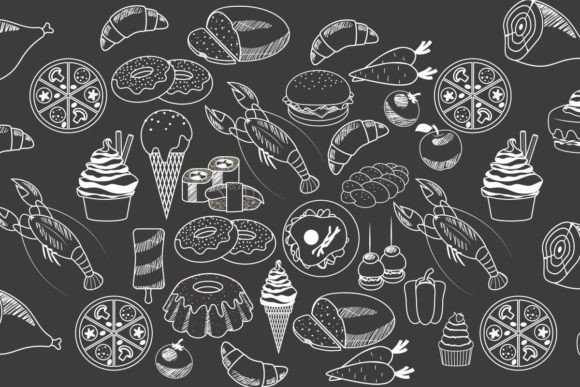
When you first open the file, the immediate takeaway is the rustic charm inherent in the chalkboard aesthetic. Unlike standard vector art that feels sterile or overly polished, this piece carries a hand-drawn weight that translates surprisingly well to thread. The theme revolves around food elements sketched against a dark, textured background, mimicking the look of a cafe menu or a homey recipe card. For an embroidery project, this mood is gold. It suggests warmth, authenticity, and a touch of artisanal flair.
The layout is seamless, which is a crucial detail for designers looking to create repeating patterns on fabric like tea towels or apron borders. However, the true test lies in the details. The illustrations are modern yet retain that loose, sketchy quality that makes them feel approachable rather than rigid. When I imagine stitching this onto a cotton tote bag, the contrast between the light chalk-like strokes and the dark background creates a visual pop that customers love. It feels less like a generic clipart and more like a curated design asset ready for a small business brand.
Real-World Application: From Screen to Stitch
I recently considered using Vector Seamless Food on Chalkboard for a specific client request: a set of matching kitchen textiles for a local bakery. They wanted something that screamed "freshly baked" without being too literal. My initial thought was to use this design as the central motif on a large pillow cover and then repeat it along the hem of their aprons. Here is how the design held up during my mental simulation and technical planning.
The versatility of this embroidery file is evident when you consider different product categories. On a sturdy canvas tote bag, the design would anchor the look perfectly, offering a sophisticated alternative to standard text-heavy logos. For a baby item, such as a bib or a soft blanket, the gentle curves of the food illustrations work well because they lack sharp, aggressive angles that might irritate sensitive skin. Even for holiday gifts, the seasonal vibe of the food theme fits seamlessly into autumn or winter collections.
However, the transition from SVG to stitch requires careful consideration. Since these are described as hand-drawn decoration elements suitable for cutting machines, converting them for embroidery means rethinking the fill stitches. A satin stitch outline might capture the chalk lines beautifully, while a fill stitch could bring depth to the food items themselves. If executed correctly, the finished product gains a level of texture that flat printing simply cannot achieve. Customers often remark on the tactile quality of embroidered designs, and this file offers a strong foundation for that premium feel.
Navigating the Challenges: Where to Be Cautious
While the design is promising, no single file is a magic bullet for every scenario. As an experienced reviewer, I must highlight where Vector Seamless Food on Chalkboard might struggle if not handled with care. One of the primary concerns is the intended background. The original concept relies on a dark chalkboard surface to make the white chalk drawings pop. In embroidery, you cannot simply "print" a black background unless you are doing a massive applique job, which adds bulk and cost.
If you plan to embroider this directly onto a light-colored fabric, you will need to stabilize the entire area with a contrasting backing or use a heavy density fill to simulate the dark board. This can lead to stiffness, especially on thin fabrics like a lightweight t-shirt or a sheer curtain. Furthermore, the intricate nature of the hand-drawn lines means that small hoop sizes could be problematic. Tiny details in the corners of the food illustrations might get lost or merge together if the stitch density is too high or the hoop diameter is too small.
Stretchy fabrics present another hurdle. While a sweatshirt or a cap might seem like obvious choices, the tension required to keep the design flat can distort the delicate, sketchy lines of the artwork. For curved surfaces like caps, the design might need significant resizing or digitizing adjustments to ensure the perspective looks natural once worn. Additionally, if the final product requires frequent washing, such as a daily-use apron or a child's clothing, the stability of the stitches becomes paramount. Dense areas of fill stitch can sometimes cause puckering over time if the stabilizer choice is incorrect.
Design Notes for the Practical Maker
To get the most out of this asset, you need to treat it as a working tool rather than a static image. Before committing to a full production run, always test the design on scrap fabric. This step is non-negotiable. You need to verify how the thread colors interact with your chosen material. A bright yellow thread might vanish against a dark background, while a stark white might look too harsh if the "chalk" effect needs to be softer.
Reviewing the stitch density is critical here. Because the original description highlights these as decoration elements for cutting machines, the conversion to an embroidery file likely involves creating outlines and fills that were not originally intended for needlework. Check whether the design works for both personal and commercial projects by confirming the licensing terms explicitly. Many creators assume that buying a graphic allows for unlimited commercial use, but this varies wildly. Ensure you have the right permissions before selling finished items like embroidered patches or boutique branding materials.
Don't forget to inspect the small details under magnification. Are the tiny stems and leaves distinct enough to stitch clearly? If the lines are too thin, consider simplifying the digitization or adding a slight outline to prevent them from disappearing. Comparing light and dark fabric backgrounds in your mockups will also give you a realistic idea of the final product value. A design that looks great on a digital mockup might fall flat on a textured linen or a glossy polyester blend.
Final Verdict on Value and Professionalism
In the end, Vector Seamless Food on Chalkboard offers a unique opportunity for crafters and Etsy sellers to differentiate their offerings. It bridges the gap between digital illustration and traditional textile art, providing a visual language that resonates with buyers looking for handmade, personalized gifts. When used correctly, it elevates the perceived professionalism of your brand, signaling that you pay attention to detail and quality.
Whether you are creating a holiday gift set, expanding your small shop merchandise, or designing a custom apparel line, this design asset has the potential to be a standout piece. Just remember that success in embroidery comes from preparation. Test your stabilizers, respect the limitations of your hoop size, and always prioritize the integrity of the stitch density. With the right approach, this design can transform a simple piece of fabric into a cherished keepsake that customers will want to display and use for years to come.